



AI over the next two years: agents, multimodality, falling costs
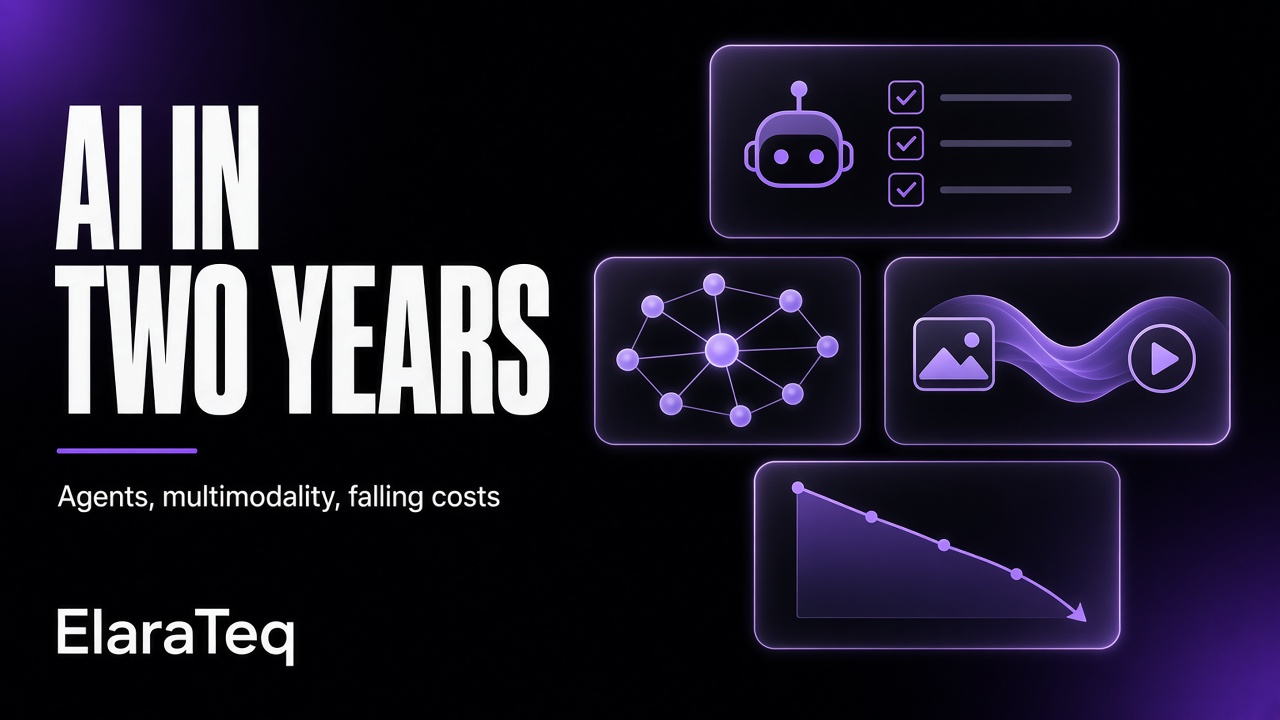
We expect three trends: agents that complete whole tasks, multimodal models in a single flow, and falling costs. It is likely that the line between chatting with an AI and delegating work to it will become much thinner.
Forecasting AI is a risky exercise: the field moves fast and many predictions age within months. We therefore offer no certainties, only a cautious reading of what we think is likely over the next two years. Three trends seem the most solid to us.
1. Agents that complete whole tasks
Today AI is mostly used step by step: you ask for a draft, correct it, then ask for the next step. We expect it to become more common to hand a whole task to the AI: gather information, use the necessary tools and deliver a result.
- Fewer manual steps: the person defines the goal, the agent handles the sequence.
- Human control: it is likely that actions with real effects will stay subject to confirmation.
- Reliability: this remains the point to verify case by case.
2. Multimodal models in a single flow
Text, voice, images and video are often separate tools today. We expect models that bring them into one flow: you speak, show an image or a video, and receive an answer in the most useful format, without switching application.
For small businesses this may mean a more natural interaction with their own data and documents. How soon and how well will depend on the individual products.
3. Sharply falling costs
The third trend concerns price. It is likely that using AI will cost noticeably less than today and become accessible to anyone, not only to organisations with dedicated budgets. We give no figures: nobody can provide them seriously over such a horizon.
Lower costs do not remove the need to choose carefully, though: which data is processed, where the services are based, who is responsible for the result.
What we do not know
There are limits it is honest to state. We do not know which products will prevail, or on what timeline. We do not know how reliable agents will be on long, ambiguous tasks. We do know that the direction is clear: less friction between a person's intention and the finished work.
For a business this means preparing the groundwork: tidy data, documented processes, clear rules on what the AI may do alone and what requires confirmation. This work is useful even if the forecasts turn out to be imprecise.
What changes in practice
In two years it is likely that the line between chatting with an AI and delegating work to it will be much thinner than today. Conversation will remain the starting point, but more and more often it will produce completed work, not just an answer.
For this reason, at ElaraTeq, we recommend starting now with small, verifiable tasks, keeping a person responsible for the result.